Introduction: The Collarette — More Than a Circle Around Your Pupil
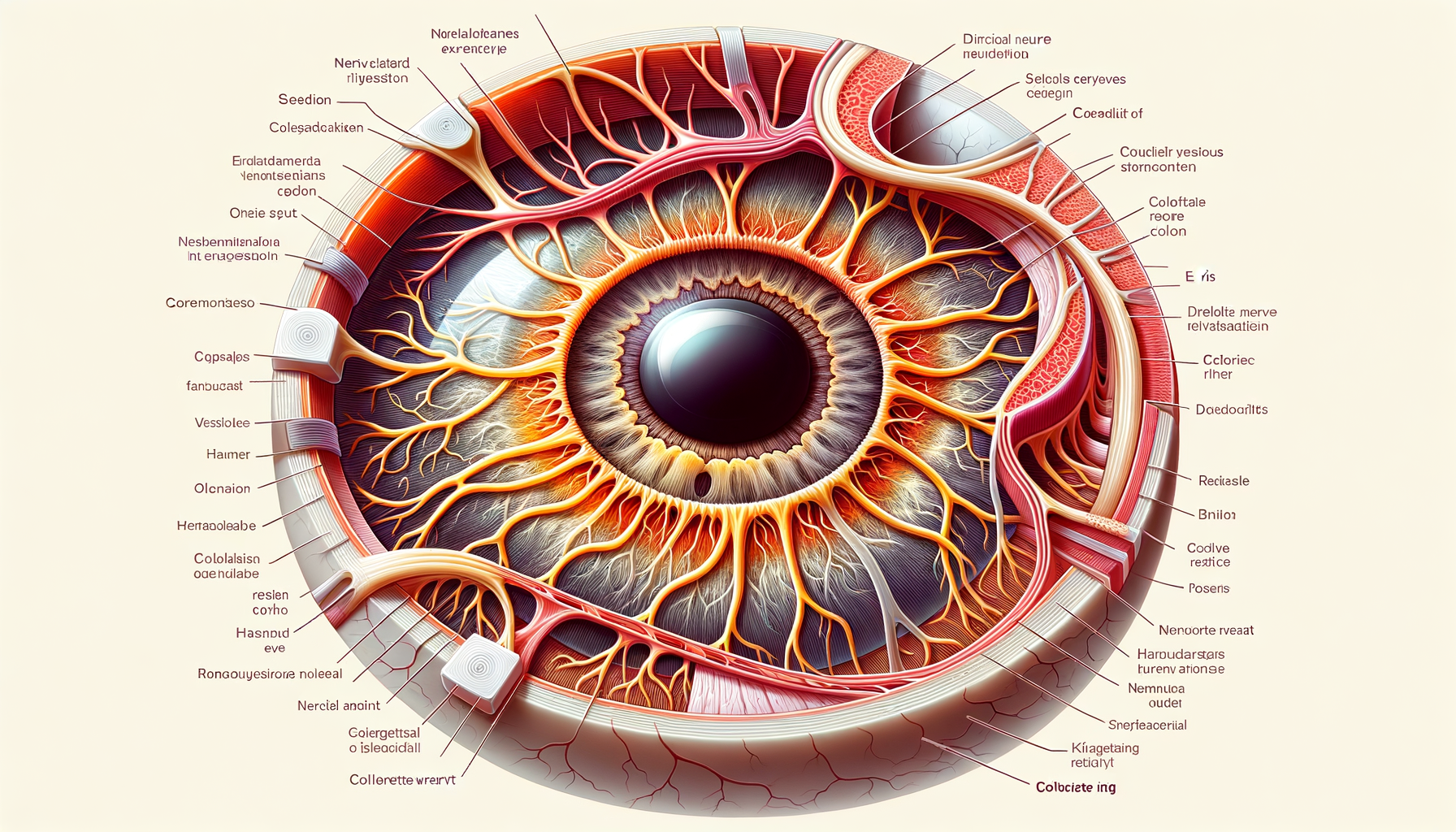
If the iris were a map, the autonomic nerve wreath (also known as the collarette) would be its border.
What the Autonomic Nerve Wreath Actually Is
Biologically, the collarette marks:
- The boundary of the major arterial circle of the iris
- A structural division created during eye development
- A visible manifestation of autonomic nervous system innervation
Why Iridologists Focus on the Collarette
In modern iridology schools, the collarette is considered:
- A reflection of digestive tone
- An indicator of autonomic nervous system activity
- A clue to inherited digestive patterns
- A marker of stress sensitivity
Collarette Variations and Meanings
Tight, Round Collarette
Interpretation: Strong digestive tone, efficient autonomic balance, good constitutional strength.
Flat or Irregular Collarette
Interpretation: May indicate digestive sensitivity, stress impact, or slower metabolic processes.
Openings in Collarette
Interpretation: Traditional iridology links these to specific organ zones requiring support.
Scalloped Edge
Interpretation: Often associated with reactive nervous system patterns and emotional sensitivity.
The Science Behind the Collarette
Medically, the collarette is simply an anatomical landmark. However, its connection to the autonomic nervous system provides some theoretical basis for iridological interpretation.
See Your Collarette Mapped
With eyescan.me, you can see your collarette clearly mapped, understand its shape variations, and receive wellness-oriented insights.
Conclusion: The Collarette Is the Heart of Constitutional Iridology
If the iris is a map, the collarette is the compass. It reveals digestive tendencies, stress patterns, constitutional type, and lifestyle alignment cues.
Once you learn to read this one structure, iridology becomes clearer, richer, and infinitely more meaningful.